


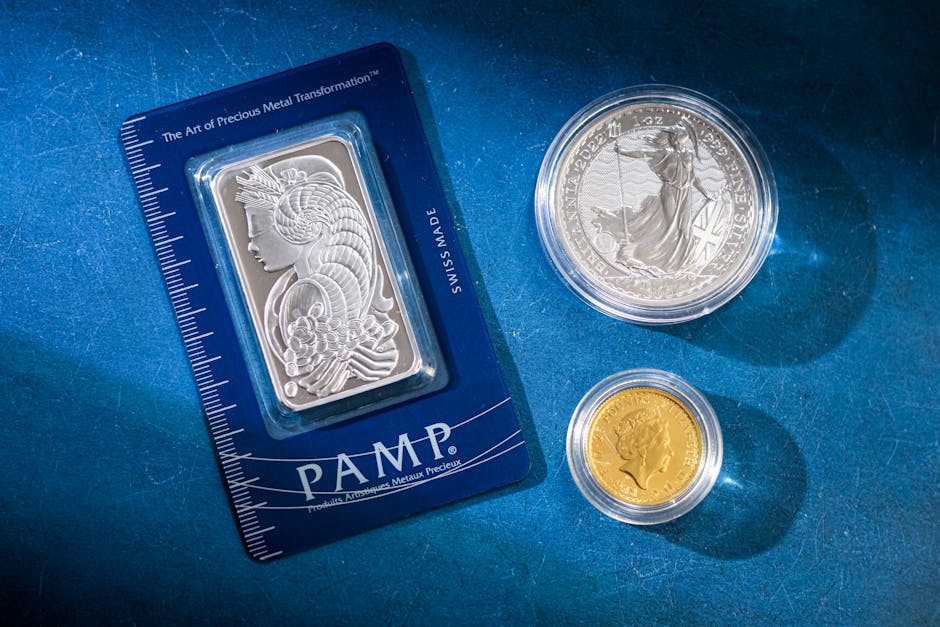
If you’ve spent any time researching precious metals, you’ve probably come across the term “gold-to-silver ratio.” It sounds technical, but the concept is surprisingly straightforward — and once you understand it, it becomes one of the most practical tools you can use when deciding whether to buy gold, buy silver, or shift between the two. This ratio has been studied by precious metals investors for generations, and for good reason. It offers a simple snapshot of how the two metals are valued relative to each other at any given moment.
What Is the Gold-to-Silver Ratio?
The gold-to-silver ratio tells you how many ounces of silver it would take to buy one ounce of gold at current spot prices. The math is simple: divide the current price of gold per ounce by the current price of silver per ounce. The result is the ratio. For example, if gold is priced at $2,000 per ounce and silver at $25 per ounce, the ratio would be 80 — meaning it takes 80 ounces of silver to equal the value of one ounce of gold.
This number fluctuates constantly as market conditions change. Economic uncertainty, industrial demand, investor sentiment, and currency movements all play a role in pushing the ratio higher or lower. Historically, the ratio has ranged anywhere from the teens to well above 100, giving investors a wide range of data to draw from when making decisions.
A Brief History of the Gold-to-Silver Ratio
For much of recorded history, governments and monetary systems fixed the ratio by law. In ancient Rome, the ratio was set around 12:1. The United States fixed it at 15:1 under the Coinage Act of 1792. These fixed ratios kept monetary systems stable but didn’t always reflect actual mining supply or market demand.
Once the world moved away from bimetallic monetary standards and toward free-floating markets, the ratio began to move more dramatically. In modern times, the ratio has averaged somewhere in the range of 50 to 80 over long periods, though it has spiked significantly higher during moments of financial stress. Understanding these historical patterns helps investors recognize when the ratio may be at an extreme — either historically high or unusually low.
How Investors Use the Ratio to Make Decisions
The most common way investors use the gold-to-silver ratio is to determine which metal offers better relative value at a given point in time. The general logic works like this: when the ratio is very high, silver is considered cheap relative to gold, making silver a potentially attractive buy. When the ratio is very low, gold is considered cheap relative to silver, suggesting gold may offer better value at that moment.
Some investors use the ratio to rotate between the two metals rather than simply holding cash. For instance, if an investor owns gold when the ratio is low, they might trade it for a larger quantity of silver when the ratio climbs to historically high levels. If the ratio later drops, they can trade back into gold and end up with more gold ounces than they started with — without ever adding additional dollars to the position. This strategy is known as ratio trading, and while it doesn’t guarantee profits, it is a disciplined framework that takes emotion out of the equation.
What the Ratio Doesn’t Tell You
It’s important to understand the limits of this tool. The gold-to-silver ratio tells you about the relative value between two metals — it says nothing about the absolute direction of either price. Both metals can fall in price while the ratio remains unchanged. A high ratio means silver is cheap compared to gold, but it does not mean silver prices are about to rise in dollar terms.
The ratio also doesn’t account for the different roles these metals play in the broader economy. Silver has significant industrial demand — it’s used in electronics, solar panels, medical devices, and more. Gold’s demand is more heavily tied to monetary reserves and jewelry. These fundamental differences mean the two metals don’t always move in lockstep, and the ratio can stay at extreme levels longer than many investors expect. Using the ratio as one tool among several, rather than as a standalone signal, is the more balanced approach.
Practical Tips for Using the Ratio as a Beginner
If you’re new to precious metals investing, here are a few practical ways to start thinking about the gold-to-silver ratio without overcomplicating things:
- Track the ratio over time. Check it regularly and compare it to historical averages. Context matters more than any single reading.
- Set personal thresholds. Some investors decide in advance that they’ll favor silver when the ratio exceeds a certain level and favor gold when it drops below another. Having a plan prevents impulsive decisions.
- Consider your storage and budget. Silver is bulky. A high ratio might favor silver, but buying large quantities of silver requires significantly more physical storage space than the equivalent dollar value in gold.
- Don’t ignore premiums. The spot price ratio is only part of the picture. The premium you pay over spot — the dealer markup on coins and bars — affects your actual cost and should be factored into any ratio-based strategy.
- Think long-term. The ratio tends to be more useful as a long-term positioning tool than as a short-term trading signal.
At Absolute Bullion, we carry a wide selection of both gold and silver coins and bars, making it easy to act on your strategy regardless of which direction the ratio points.
Combining the Ratio With Other Factors
Smart investors don’t rely on any single metric. The gold-to-silver ratio works best when combined with other considerations, such as the overall macroeconomic environment, inflation trends, real interest rates, and your own personal financial goals. If inflation is rising and the ratio is historically high, that might be a compelling case for loading up on silver. If economic uncertainty is driving a flight to safety and the ratio is low, gold might deserve the heavier allocation.
You should also consider your overall portfolio balance. Precious metals are traditionally viewed as a store of value and a hedge against uncertainty — not as a get-rich-quick vehicle. Deciding how much of your portfolio belongs in precious metals at all is a more fundamental question than which metal to choose, and the answer will look different for every investor based on their timeline, risk tolerance, and financial situation.
Getting Started With Your Precious Metals Strategy
The gold-to-silver ratio is one of the most accessible and time-tested tools available to precious metals investors at any level of experience. It won’t predict the future, but it can bring discipline and historical perspective to decisions that might otherwise be driven by headlines or emotion. Understanding what the ratio means, how it has behaved over time, and what its limitations are puts you in a much stronger position as a buyer.
Whether the ratio is pointing toward gold or silver right now, the best first step is to check live pricing and explore your options. Visit absolutebullion.com to see current inventory and spot-based pricing on gold and silver coins and bars, and take the next step toward a more informed precious metals strategy.